10 Advanced SEO Strategies for 2026 That Improve Search Visibility
Advanced SEO techniques for Google rankings, AI-powered search, technical performance and sustainable organic growth.
Search engine optimisation in 2026 requires more than publishing articles, selecting keywords and building backlinks. Businesses must understand how search engines discover information, evaluate website quality, interpret content relationships and connect users with relevant answers.
Artificial intelligence is also influencing the search experience. Google AI Overviews and conversational search platforms are changing how information is presented, while traditional organic search results remain an important source of website traffic.
For businesses investing in SEO, the challenge is deciding which improvements will make a meaningful difference. A website may have hundreds of optimised pages and still struggle with indexing, keyword targeting, technical performance or competition from more established resources.
Advanced SEO focuses on identifying these problems and applying targeted improvements that can be measured over time.
This guide explores ten practical SEO strategies for 2026, including technical auditing, AI search optimisation, content architecture, structured data, internal linking and performance analysis. Each strategy explains why it matters, how to implement it and which tools can support the process.
What Is Advanced SEO?
Advanced SEO is the process of improving a website’s organic search performance through detailed technical analysis, content optimisation, information architecture and authority development.
Basic SEO establishes important foundations, such as descriptive page titles, useful content, accessible navigation and appropriate indexing settings. Advanced SEO examines how these elements work together across an entire website.
For example, an established WordPress website may have several articles targeting similar search queries. Although each page is individually optimised, the overall content structure may make it difficult to identify the strongest resource for a particular search intent.
Similarly, a website may publish comprehensive articles but receive limited organic traffic because important pages are poorly linked, excluded from indexing or not aligned with the queries generating impressions.
Advanced SEO addresses these problems systematically rather than relying on isolated changes.
1. Find SEO Growth Opportunities Using Google Search Console
One of the most effective advanced SEO techniques is analysing existing search performance before creating new content.
Google Search Console provides information about the queries for which a website appears, which pages receive impressions, how frequently users click through and where opportunities may exist.
This is particularly valuable for established websites that already have indexed content but are struggling to increase organic traffic.
How to identify opportunities
Open Google Search Console and navigate to Performance → Search results.
Select a meaningful comparison period, such as the most recent three months compared with the previous three months. Review total clicks, impressions, average click-through rate and average position.
Look for pages receiving substantial impressions but relatively few clicks. These pages may benefit from improved titles, stronger search intent alignment or more useful content.
Next, identify queries where the website appears beyond the most prominent search positions. Investigate whether the existing page adequately addresses the topic and whether competing results offer more useful information.
For example, an SEO article appearing for searches about technical SEO audits may need clearer implementation instructions rather than additional general explanations about the benefits of SEO.
What to measure
Monitor changes in relevant query impressions, clicks, click-through rates and average position. Compare results over a suitable period and consider changes in search demand and competing pages.
Recommended tools: Google Search Console, Google Sheets and Looker Studio.
2. Optimise Content for AI Search, AEO and GEO
AI-powered search experiences are influencing how users discover information. Some search platforms provide generated summaries, direct answers and links to supporting sources rather than relying exclusively on conventional result listings.
This has increased interest in Answer Engine Optimisation (AEO) and Generative Engine Optimisation (GEO).
AEO focuses on making information useful for direct answers, while GEO addresses how content may be discovered and represented in generative search experiences.
These approaches overlap with traditional SEO. Accessible pages, reliable information, clear explanations and credible sources remain important.
How to implement AI search optimisation
Begin with the questions your customers ask before choosing a product or service.
For a WordPress hosting company, these might include questions about shared hosting, website migration, security, backups and the difference between managed hosting and standard hosting.
Create content that answers each question clearly, then explain the technical considerations and practical implications.
Use descriptive headings, logical paragraphs and examples that demonstrate genuine subject knowledge.
Where possible, include original information such as tested configurations, documented processes, product specifications or verified case studies.
Maintain consistent business information and connect related content through relevant internal links.
What to avoid
Avoid creating large volumes of near-identical question-and-answer pages purely to target AI-generated responses.
Do not assume that adding FAQ schema, repeating keywords or using a particular writing format guarantees inclusion in AI search.
There is no reliable method of guaranteeing that an AI platform will cite a specific website.
Recommended tools: Google Search Console, Bing Webmaster Tools, Schema Markup Validator and manual AI search research.
3. Improve Search Intent and Content Quality
Search intent describes what a person is trying to accomplish when entering a query.
Some users want a definition or explanation. Others need a tutorial, a comparison, a local business or a service provider.
A page can contain relevant keywords and still perform poorly if it does not satisfy the underlying search intent.
Consider someone searching for “advanced SEO techniques”. They are likely looking for practical methods that go beyond introductory advice.
An article that simply recommends publishing good content, using keywords and improving website speed may not provide enough value for that audience.
How to improve intent alignment
Search for the primary topic and examine the types of pages appearing prominently.
Identify whether users are being served tutorials, lists, tools, service pages or technical documentation.
Compare the depth of information and practical examples provided by competing resources.
Then evaluate whether your page answers the same underlying need while offering something genuinely useful and different.
For advanced SEO content, this could include a Search Console workflow, a technical audit example, a structured data implementation or a practical content consolidation process.
Why original information matters
Search results already contain substantial amounts of generic SEO advice. Repeating that information in different words may provide limited additional value.
Businesses with practical technical experience can differentiate their content by explaining how problems are identified, tested and resolved.
Original examples should reflect genuine work. Do not invent client results, ranking improvements or technical findings.
Recommended tools: Google Search, Search Console, Semrush and Screaming Frog.
4. Resolve Technical SEO, Crawling and Indexing Problems
Technical SEO determines whether search engines can access, interpret and potentially index important website pages.
A website may contain excellent content but struggle to appear in search results because of incorrect indexing instructions, canonical conflicts, broken links or server errors.
WordPress websites can also generate additional URLs through categories, tags, author archives, search pages and multilingual plugins.
Not every automatically generated URL needs to be indexed.
How to conduct an advanced technical audit
Start with a website crawl using Screaming Frog or a similar technical SEO tool.
Identify important URLs returning errors, redirect chains, duplicate canonical declarations and unexpected noindex instructions.
Compare these findings with Google Search Console’s Page indexing reports.
Check whether important pages are included in XML sitemaps and whether those pages return successful responses, permit indexing and declare the intended canonical URLs.
Review robots.txt separately from meta robots instructions. A robots.txt disallow rule restricts crawling; it does not function as a guaranteed noindex directive.
For multilingual websites, verify that language alternatives exist, return appropriate responses and use accurate hreflang references.
Example: Sitemap processing errors
If Google Search Console reports a temporary sitemap processing error, first check whether the sitemap URL loads correctly.
Confirm that the response is valid XML, the server is responding reliably and the sitemap contains appropriate URLs.
Review server logs and hosting security rules if Google cannot consistently retrieve the file.
Do not assume that resubmitting the sitemap alone resolves the underlying problem.
Recommended tools: Screaming Frog, Google Search Console, server logs and XML validation tools.
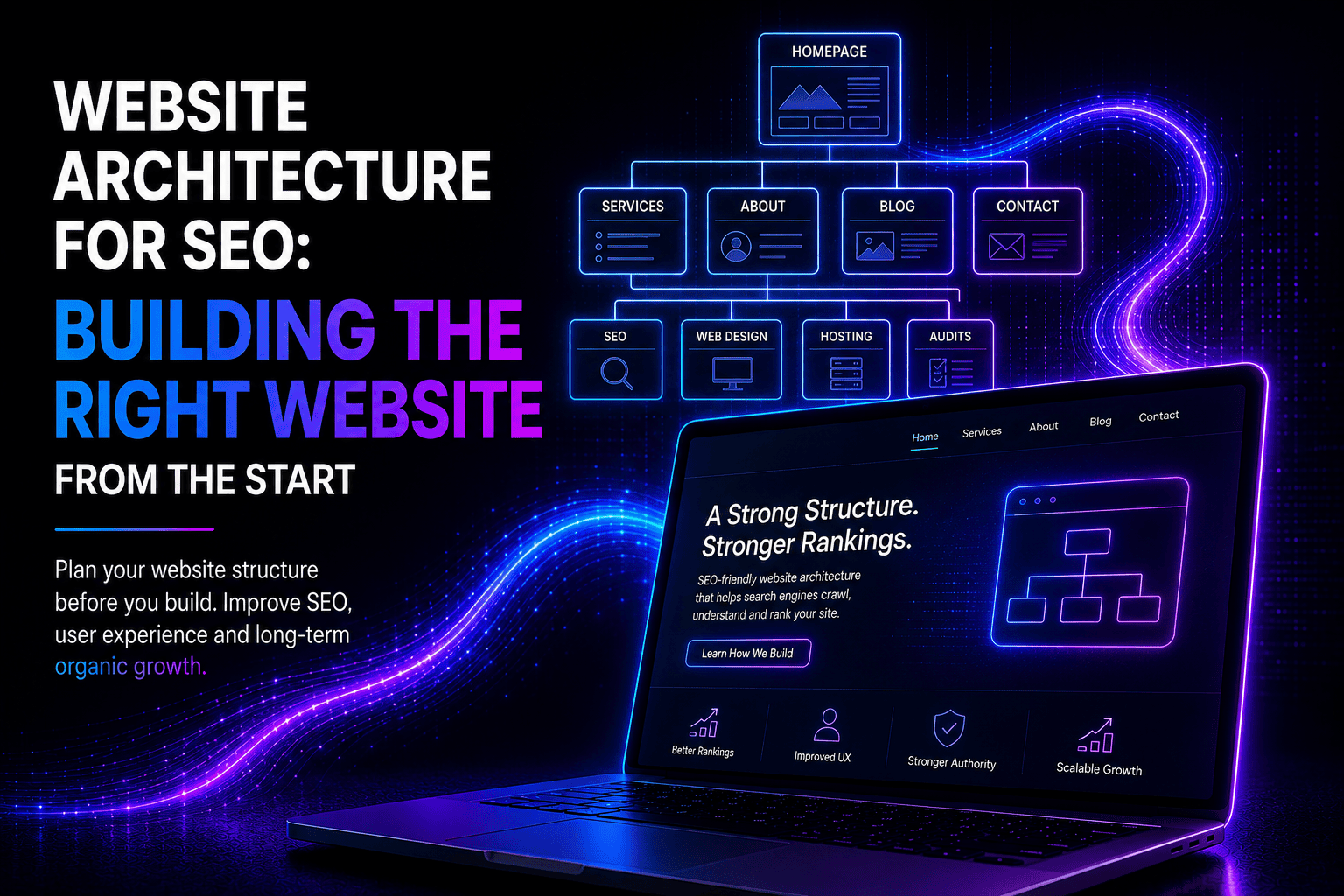
5. Build Topic Clusters and Improve Content Architecture
Content architecture determines how information is organised across a website.
A well-structured website helps visitors navigate related topics and provides search engines with clearer relationships between pages.
Topic clusters organise supporting articles around a central pillar page or important service page.
For example, a website offering SEO services might have a central SEO Services page supported by technical SEO, local SEO, WordPress SEO and analytics resources.
Each supporting article should address a distinct search intent.
How to build a topic cluster
Identify the primary commercial or informational topic.
Group related search queries according to intent and determine which topics deserve dedicated pages.
Create a content map showing the main page, supporting articles and relevant internal links.
Review existing content before publishing new articles.
If multiple pages cover essentially the same subject, consider whether they should be consolidated, differentiated or linked more effectively.
Avoid keyword cannibalisation
Keyword cannibalisation becomes a concern when overlapping pages compete for substantially the same intent and weaken the site’s content structure.
However, two pages appearing for the same query does not automatically mean they are cannibalising each other.
Evaluate the purpose, content and performance of each page before consolidating or redirecting URLs.
Recommended tools: Google Search Console, Screaming Frog, Ahrefs and content mapping spreadsheets.
6. Strengthen Internal Linking to Important Pages
Internal links connect website pages and help visitors discover additional relevant information.
They also allow search engines to navigate the website and understand relationships between resources.
For established websites, improving internal linking can be an efficient way to strengthen existing content without publishing additional articles.
How to implement an internal linking audit
Identify the website’s most important commercial and informational pages.
Review existing articles that naturally relate to those pages.
Add contextual links where they help readers continue their research or understand a related service.
Use descriptive anchor text that communicates the destination without repeating the same exact-match phrase unnaturally.
Check for orphan pages that have no meaningful internal links.
Also review internal links pointing through redirects and update them to reference the final destination where appropriate.
Example: SEO service content
An article about Google Search Console can link to a technical SEO guide when discussing indexing problems.
A WordPress performance article can link to a more detailed Core Web Vitals resource.
A guide explaining organic search performance can link to an SEO reporting article or relevant service page.
These connections should be based on relevance, not an arbitrary requirement to insert a fixed number of links.
Recommended tools: Screaming Frog, Google Search Console and WordPress linking tools.
7. Use Structured Data and Entity Relationships Correctly
Structured data helps search engines interpret information about website content.
Schema.org vocabulary provides standardised ways to describe organisations, articles, products, services, people and other entities.
When implemented correctly, structured data can support eligible search features and improve the clarity of machine-readable information.
However, structured data does not automatically increase rankings or guarantee rich results.
How to implement structured data
Start with the organisation or business information already presented on the website.
Use appropriate Organisation or LocalBusiness markup where relevant.
For editorial content, consider Article structured data with accurate information about the headline, author, publisher and publication dates.
Connect related entities through consistent identifiers where appropriate.
Use BreadcrumbList markup to describe genuine navigational hierarchies.
Validate the implementation and ensure that structured data reflects visible page content.
Common mistakes
Avoid adding unsupported review ratings, fabricated author credentials or product information that does not appear on the page.
Do not assume every schema type qualifies for a Google rich result.
Some structured data types remain useful for describing content even when Google does not provide a corresponding enhanced search appearance.
Recommended tools: Google Rich Results Test, Schema Markup Validator and WordPress SEO plugins.
8. Improve Core Web Vitals and WordPress Performance
Website performance affects how quickly users can access content and interact with pages.
Slow loading, delayed interactions and unexpected layout movement can make websites frustrating to use, particularly on mobile devices.
Google’s Core Web Vitals measure three important aspects of the user experience.
Largest Contentful Paint (LCP) evaluates loading performance, Interaction to Next Paint (INP) measures responsiveness and Cumulative Layout Shift (CLS) measures visual stability.
How to improve performance
Start by testing important pages with PageSpeed Insights.
Review the difference between laboratory test results and real-user field data where available.
Identify oversized images, unnecessary JavaScript, render-blocking resources and excessive third-party scripts.
For WordPress websites, review theme performance, page builders, caching configurations and hosting response times.
Optimise images using suitable formats and dimensions.
Remove unnecessary plugins where possible and ensure caching does not interfere with dynamic website functionality.
Why hosting matters
Server performance, resource limits and caching configuration can influence loading times.
However, upgrading hosting alone does not automatically resolve poorly optimised scripts, oversized assets or layout instability.
Performance improvements should be tested in a staging environment where appropriate before deployment.
Recommended tools: PageSpeed Insights, Lighthouse, Chrome DevTools and server monitoring tools.
9. Strengthen Website Credibility, Expertise and Relevant Backlinks
Search visibility is influenced by more than technical optimisation.
Users need confidence that the information they find is accurate, relevant and produced by a credible source.
Experience, Expertise, Authoritativeness and Trustworthiness (E-E-A-T) provide a useful framework for evaluating content quality.
E-E-A-T is not a single numerical ranking score. It describes qualities that can help assess whether content deserves trust.
How to demonstrate expertise
Publish accurate business information and clear service descriptions.
Identify authors or responsible organisations where relevant.
Include genuine case studies, technical explanations and documented experience.
Maintain appropriate editorial review processes for topics involving financial, medical or legal information.
Where claims depend on external research, reference credible sources.
Build relevant backlinks
Develop relationships with appropriate industry publications, business partners and professional organisations.
Publish useful research, resources and commentary that others may want to reference.
Prioritise relevance and editorial quality over large quantities of low-value links.
Avoid purchasing links intended to manipulate rankings or participating in automated link schemes.
Recommended tools: Ahrefs, Semrush, Google Search and industry research sources.
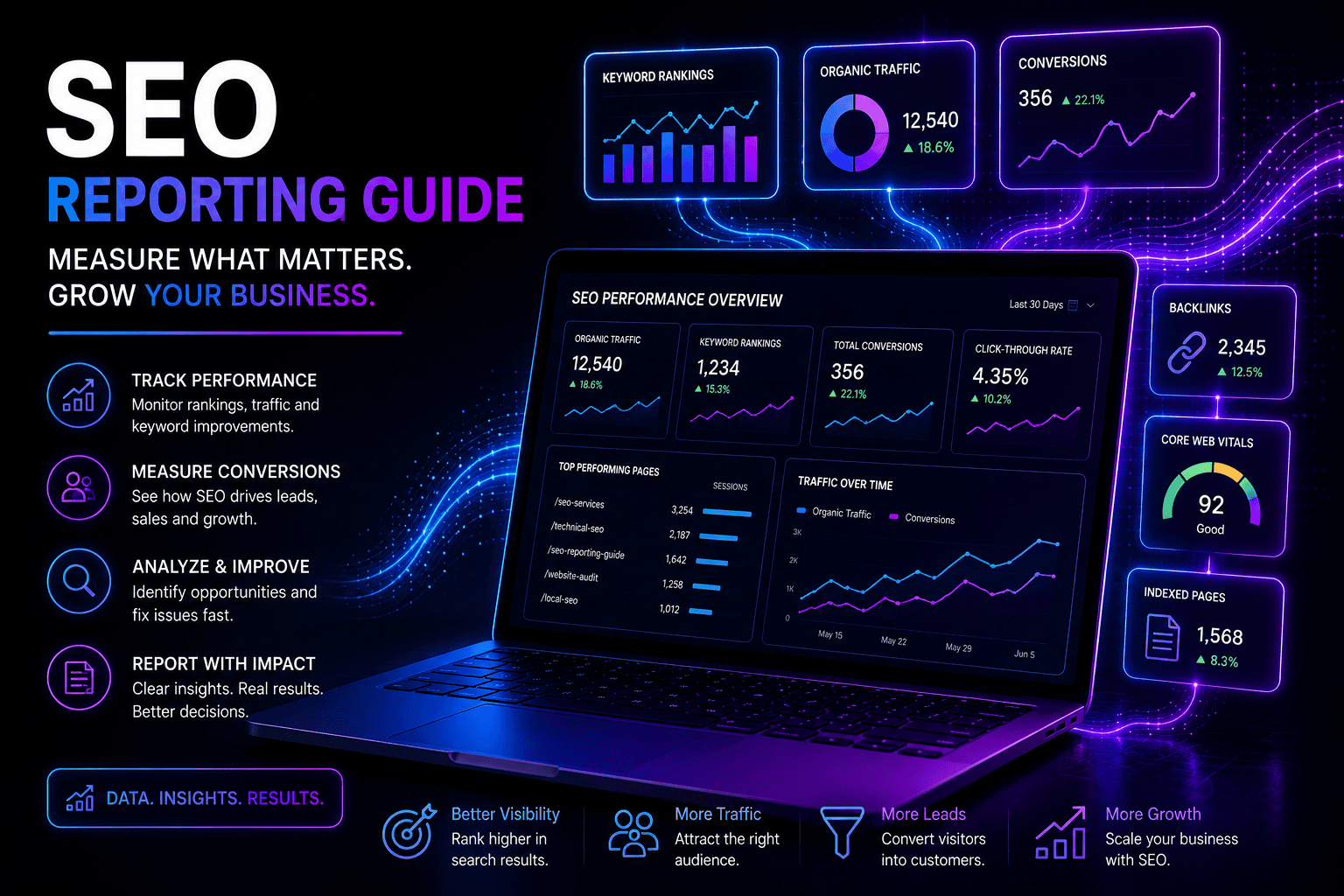
10. Measure SEO Performance and Continuously Improve
Advanced SEO requires ongoing measurement.
Publishing new content or completing a technical audit does not establish whether the work has improved business performance.
Google Search Console and Google Analytics 4 provide different but complementary information.
Search Console measures how pages appear and perform in Google Search, while GA4 helps analyse website behaviour and configured events.
How to build an SEO measurement framework
Begin by identifying the business outcomes that matter.
For a service-based company, these might include qualified enquiries, successful contact form submissions or consultation requests.
For an ecommerce business, purchases and revenue may be more relevant.
Configure appropriate GA4 events and test them to confirm that they represent successful actions.
Use Google Tag Manager where suitable to manage tracking implementation.
Create reports showing organic landing pages, search queries, engagement and relevant conversions.
Compare performance before and after meaningful website changes, while accounting for seasonality, search demand and other influences.
Maintain an SEO improvement cycle
Review search performance regularly.
Identify pages with declining visibility, technical problems or opportunities for better search intent alignment.
Prioritise improvements according to business importance and available evidence.
Document changes and evaluate results over time.
SEO performance is influenced by competition, search behaviour and search engine systems, so individual improvements cannot be guaranteed to produce ranking increases.
Recommended tools: Google Search Console, Google Analytics 4, Google Tag Manager and Looker Studio.
Advanced SEO Tools for 2026
The right tools help identify problems, prioritise opportunities and evaluate results.
| Tool | Main use |
|---|---|
| Google Search Console | Search queries, indexing, clicks and impressions |
| Google Analytics 4 | Website engagement and conversions |
| Google Tag Manager | Event tracking and tag management |
| Screaming Frog | Technical SEO and website crawling |
| Ahrefs | Backlink analysis and keyword research |
| Semrush | Competitor research and SEO auditing |
| PageSpeed Insights | Core Web Vitals and performance |
| Google Rich Results Test | Supported structured data testing |
| Schema Markup Validator | Schema.org markup validation |
| Looker Studio | Search and analytics dashboards |
Free tools can support many important SEO activities. Premium platforms become more useful when websites require larger-scale analysis, competitor research or more detailed technical investigations.
Which Advanced SEO Strategies Should You Prioritise?
The most effective strategy depends on the website’s current condition.
A new business website may need stronger service pages, local relevance and technical foundations before investing heavily in advanced content campaigns.
An established blog with substantial content may benefit more from content consolidation, internal linking and Search Console analysis.
A large ecommerce website may require specialised work involving product indexing, filtering systems, structured data and crawling efficiency.
Rather than implementing all ten strategies simultaneously, start with an audit that identifies the most significant barriers to visibility.
Prioritise changes according to potential business value, implementation effort and the evidence available.
Frequently Asked Questions
What are advanced SEO strategies?
Advanced SEO strategies are techniques used to improve organic search performance through technical analysis, content architecture, search intent optimisation, structured data, authority development and performance measurement.
What is the most important SEO strategy in 2026?
There is no single strategy that is most important for every website. Technical accessibility, useful content, clear search intent and trustworthy information remain essential. The highest priority depends on the website’s existing problems and opportunities.
Does AI search replace traditional SEO?
No. AI-powered search introduces additional discovery experiences, but traditional search visibility and the technical foundations of SEO remain relevant.
How long does advanced SEO take to work?
Results vary according to competition, website history, technical conditions and the changes implemented. Some improvements may be recognised relatively quickly, while broader content and authority-building initiatives can take months or longer.
Can advanced SEO improve an existing WordPress website?
Yes. WordPress supports technical optimisation, structured data, content architecture and analytics integration. Effective results depend on implementation quality, hosting conditions and the website’s existing structure.
Do longer articles rank better on Google?
Not automatically. An article should be long enough to satisfy the intended search need. Useful explanations, original information and clear structure are more important than targeting an arbitrary word count.
How do I know whether my SEO strategy is working?
Measure relevant organic clicks, impressions, query visibility, indexing health and meaningful business conversions. Evaluate changes over time rather than relying on a single ranking or traffic figure.
Conclusion: Focus on SEO Improvements That Matter
Advanced SEO in 2026 is about making informed improvements to how websites are discovered, understood and used.
AI-powered search, structured data and technical optimisation create additional opportunities, but none replaces the need for useful information, credible expertise and a well-maintained website.
Businesses that want to improve organic visibility should begin by understanding their current performance, identifying the most significant problems and developing a measurable optimisation plan.
The objective is not to implement every available SEO technique. It is to apply the strategies that make the website more useful, accessible and relevant to its intended audience.
Advanced SEO Services in South Africa
Web Anatomy provides SEO strategy, technical optimisation, WordPress website management, content architecture and analytics support for businesses looking to improve their online visibility.
Our approach combines website development knowledge, technical SEO analysis and ongoing search performance reporting.
Explore our services at https://webanatomyseo.com/.