Enterprise SEO: The Complete Guide to Scaling Organic Growth Across Large Websites
Enterprise SEO is more than simply applying SEO to a larger website. It is the strategic process of managing search engine optimisation across complex digital ecosystems using scalable technical processes, structured content strategies, automation, and cross-functional collaboration.
Unlike SEO for smaller websites, Enterprise SEO focuses on governing thousands of pages, multiple website templates, international markets, and large teams while ensuring every improvement supports long-term business objectives. As websites grow, manual optimisation becomes impractical, making structured systems, clear governance, and technical excellence essential.
Search has also evolved. Google’s AI-powered search experiences, alongside platforms such as ChatGPT, Microsoft Copilot, Gemini and Perplexity, increasingly summarise information from trusted sources. Enterprise organisations must therefore create content that is not only easy for search engines to crawl and index but also clear enough for AI systems to understand, reference and summarise.
This guide explores the core principles of Enterprise SEO, from technical foundations and information architecture to content governance, AI-powered search and measuring business success.
What is Enterprise SEO?
Enterprise SEO is the practice of managing search engine optimisation across large or highly complex websites using scalable processes rather than manual page-by-page optimisation.
While many enterprise websites contain thousands—or even millions—of URLs, complexity is what truly defines Enterprise SEO. A business may require enterprise-level SEO because it operates multiple brands, serves international markets, manages a large ecommerce catalogue, publishes extensive editorial content, or relies on custom-built digital platforms.
Enterprise SEO combines several disciplines into one coordinated strategy, including:
- Technical SEO
- Information architecture
- Content strategy
- Website governance
- Automation
- Performance optimisation
- Analytics and reporting
- Cross-functional collaboration
Instead of treating SEO as a marketing task, Enterprise SEO becomes an ongoing operational process that supports business growth across an entire organisation.
Why Enterprise SEO Matters
As websites grow, so does their complexity. A single technical issue can affect thousands of pages, while small improvements can generate significant increases in traffic, leads and revenue.
Large organisations often face challenges that smaller websites rarely encounter, including:
- Multiple development teams
- Large content libraries
- International websites
- Multiple stakeholders
- Frequent website deployments
- Complex approval workflows
- Large ecommerce catalogues
- Custom CMS platforms
Without structured governance, these challenges can lead to duplicate content, crawl inefficiencies, inconsistent metadata, poor internal linking and missed opportunities in search.
Enterprise SEO provides the framework needed to manage these complexities while maintaining consistent quality across an entire digital ecosystem.
Enterprise SEO vs SEO for Smaller Websites
Although the fundamental principles of SEO remain the same, the way they are implemented changes dramatically as a website grows.
| SEO for Smaller Websites | Enterprise SEO |
|---|---|
| Optimises a limited number of pages | Manages large or highly complex websites |
| Manual optimisation | Scalable, template-driven optimisation |
| Small marketing team | Cross-functional teams including SEO, developers, content, IT and product managers |
| Standard CMS platforms | Enterprise or custom-built CMS platforms |
| Simple reporting | Advanced reporting tied to business objectives |
| Local or regional focus | National, international or multi-brand organisations |
| Limited technical complexity | Complex technical architecture and governance |
| Individual page optimisation | Platform-wide optimisation through systems and templates |
The difference is not simply website size. Enterprise SEO is defined by organisational complexity, scalability and the need for structured processes that allow thousands of pages to be managed consistently.
A useful way to think about it is this:
If one technical or content change affects hundreds or thousands of pages, you’re operating in an Enterprise SEO environment.
Core Technical Pillars of Enterprise SEO
Strong technical foundations allow search engines to efficiently crawl, understand and index large websites while delivering a better experience for users.
Technical SEO
Technical SEO forms the foundation of every successful Enterprise SEO strategy. Before investing in content creation or link building, search engines must be able to discover, crawl and correctly interpret your website.
Enterprise technical SEO typically focuses on:
- Crawlability
- Indexability
- Canonicalisation
- XML sitemaps
- Robots.txt management
- Redirect management
- HTTPS security
- JavaScript rendering
- Duplicate content prevention
Because enterprise websites often rely on templates and shared components, a single technical issue can quickly affect thousands of pages. Regular technical audits and close collaboration between SEO specialists and development teams help prevent widespread indexing and performance problems.
Information Architecture
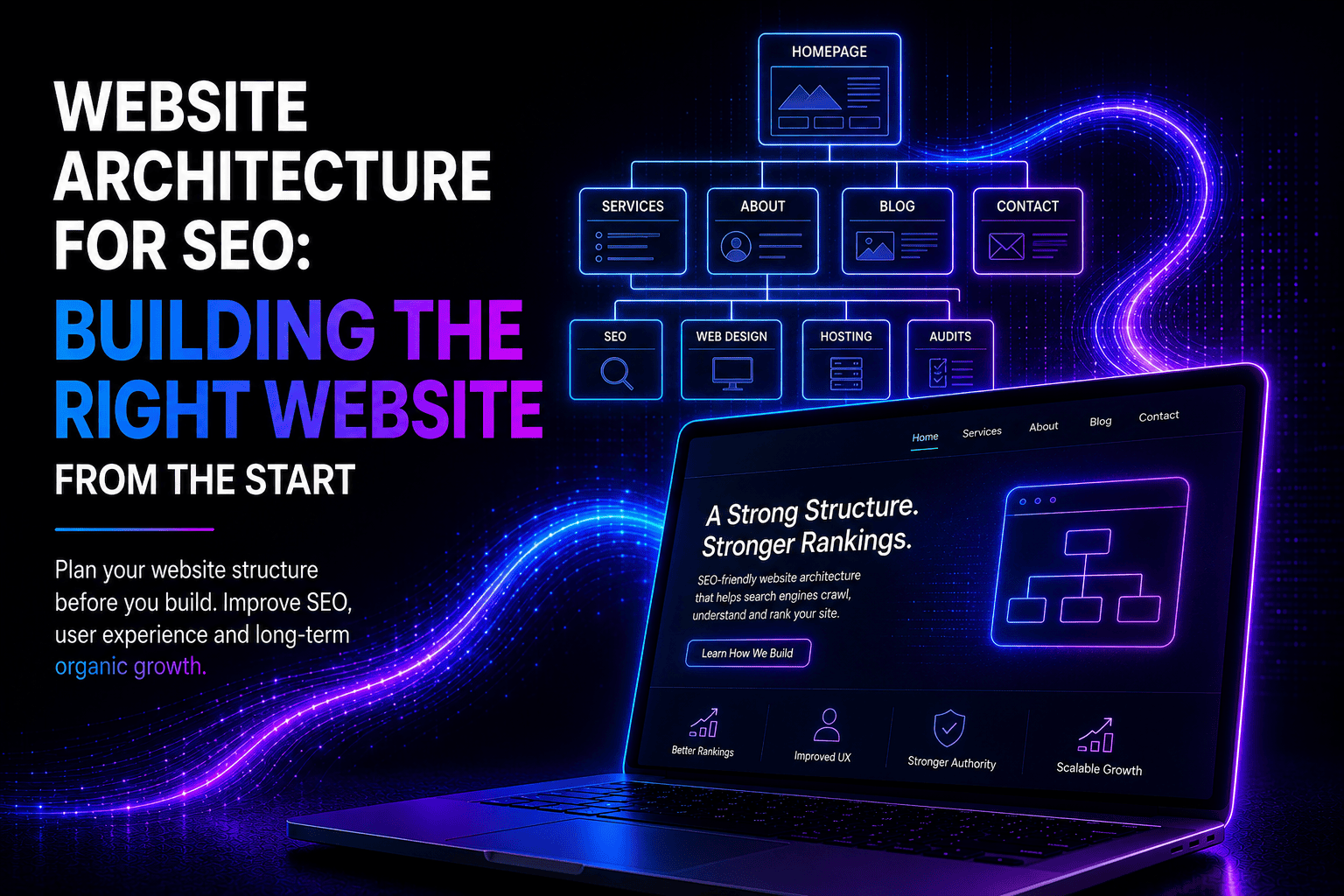
Information architecture is one of the most overlooked aspects of Enterprise SEO, yet it plays a vital role in both user experience and search visibility.
A well-structured website helps visitors find information quickly while enabling search engines to understand how pages relate to one another.
Effective information architecture includes:
- Logical website hierarchy
- Descriptive URL structures
- Clear navigation
- Breadcrumb navigation
- Parent and child page relationships
- Topic clusters
- Internal linking strategies
- Well-planned taxonomy
As enterprise websites expand, maintaining a logical structure becomes increasingly important for both crawl efficiency and topical authority.
Crawlability and Indexing
Search engines must first discover and crawl your content before it can appear in search results.
For most small websites, crawl budget is rarely a concern. However, organisations managing very large websites or frequently publishing new content should ensure search engines focus on their most valuable pages.
Best practices include:
- Maintaining accurate XML sitemaps
- Blocking unnecessary pages through robots.txt where appropriate
- Using canonical tags correctly
- Removing low-value or duplicate pages from the index
- Fixing broken links and redirect chains
- Monitoring crawl errors through Google Search Console
Efficient crawling improves indexation while helping search engines prioritise the pages that matter most.
Core Web Vitals and Website Performance
Website performance directly affects user experience and supports long-term search performance.
Google’s Core Web Vitals measure key aspects of page experience, including loading speed, responsiveness and visual stability. While they are only one of many ranking signals, improving performance benefits both users and search engines.
Enterprise websites should focus on:
- Fast server response times
- Global content delivery networks (CDNs)
- Image optimisation
- Modern image formats
- Efficient caching
- Reduced JavaScript execution
- Lazy loading where appropriate
- Continuous performance monitoring
Improving performance across templates rather than individual pages delivers the greatest impact at enterprise scale.
Structured Data
Structured data helps search engines better understand webpage content and may make pages eligible for enhanced search features such as rich results.
Enterprise websites should implement structured data consistently through reusable templates rather than manual page-by-page updates.
Common schema types include:
- Organisation
- Article
- Product
- FAQ
- Breadcrumb
- Local Business
- Event
- Review
Consistent implementation improves scalability and helps modern search systems interpret content more accurately.
Content Strategy and Governance
Content is one of the most valuable assets of any enterprise website, but success depends on more than publishing large volumes of pages. Enterprise SEO focuses on creating high-quality, helpful content that aligns with user intent, business objectives, and Google’s people-first approach.
Rather than treating each page as an isolated asset, enterprise websites should organise content into topic clusters. A pillar page covers a broad subject, while supporting pages explore related topics in greater detail. Strong internal linking connects these pages, helping users navigate naturally while reinforcing topical authority for search engines.
Every piece of content should have a clear purpose. Ask:
- Does this page answer a real user question?
- Does it provide unique value?
- Is it accurate and up to date?
- Does it demonstrate genuine expertise?
- Does it support a business objective?
Regular content audits help identify outdated information, duplicate pages, and opportunities to improve quality. Enterprise websites should also establish editorial standards covering tone of voice, metadata, internal linking, structured data, accessibility, and publishing workflows to ensure consistency across thousands of pages.
Governance at Scale
Governance is one of the defining characteristics of Enterprise SEO. As organisations grow, content creation involves marketing teams, developers, product managers, designers, legal departments, and external agencies. Without clear governance, quality quickly becomes inconsistent.
An effective governance framework includes:
- Editorial guidelines
- Metadata standards
- URL structure policies
- Redirect management
- Internal linking standards
- Structured data implementation
- Technical quality assurance
- Content review schedules
- Cross-team approval workflows
Governance ensures every update supports the long-term health of the website rather than creating technical debt or inconsistent user experiences.
Preparing for AI-Powered Search
Search is evolving rapidly. Alongside traditional search results, users increasingly receive answers from AI-powered experiences such as Google AI Overviews, AI Mode, ChatGPT, Microsoft Copilot, Gemini and Perplexity.
While the technologies differ, they all aim to surface accurate, trustworthy and well-structured information.
Rather than trying to “optimise for AI,” Enterprise SEO should focus on creating content that AI systems can confidently understand, reference and summarise.
Best practices include:
- Answer questions clearly and directly.
- Demonstrate first-hand expertise where possible.
- Publish original insights and research.
- Structure content with logical headings.
- Use descriptive tables and bullet lists.
- Implement structured data where appropriate.
- Maintain accurate and regularly updated information.
- Build topical authority around core subject areas.
AI-powered search rewards websites that consistently produce reliable, well-organised and authoritative content rather than simply targeting keywords.
Measuring Enterprise SEO Success
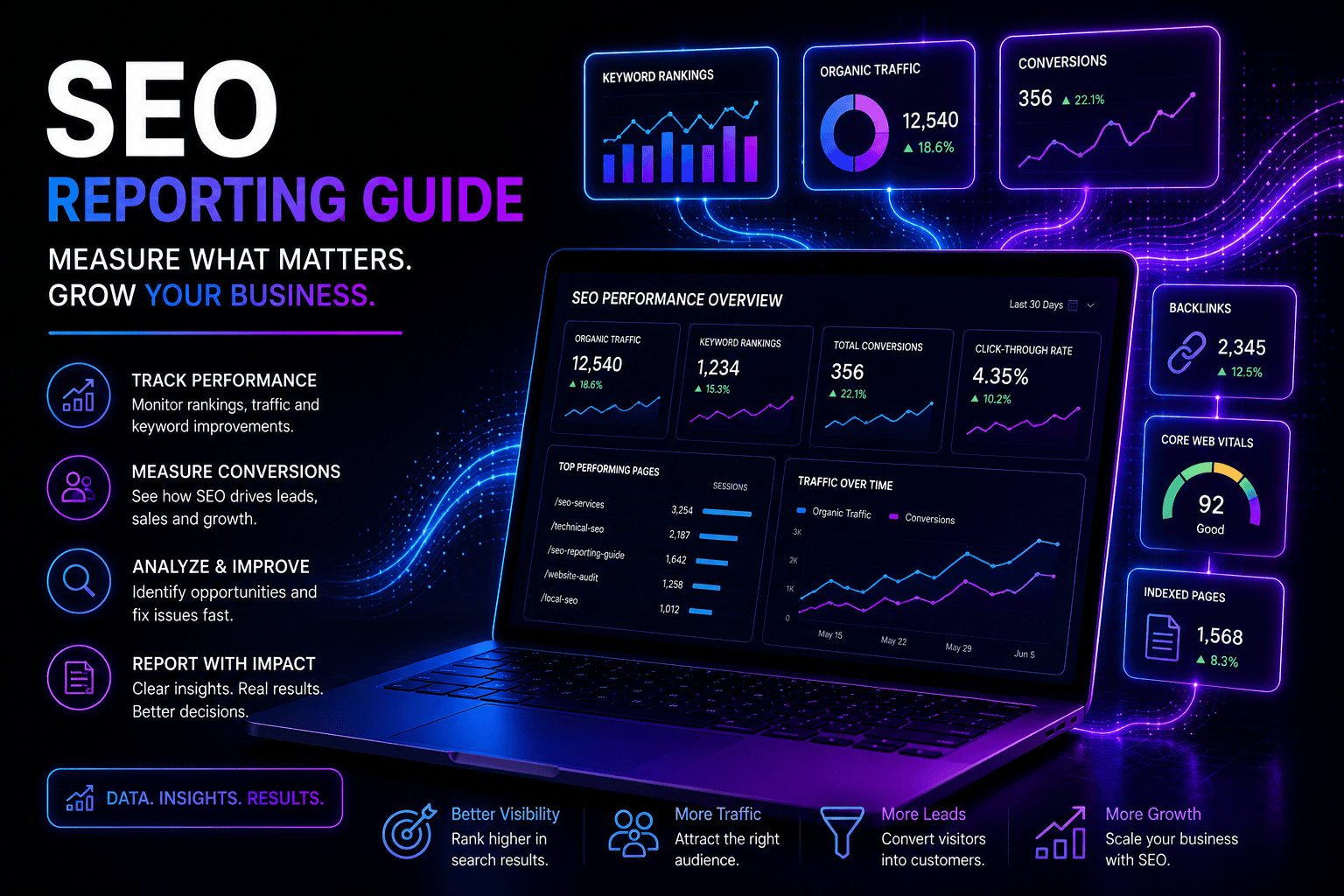
Enterprise SEO should be measured by business outcomes rather than rankings alone.
Although keyword visibility remains important, leadership teams are typically more interested in how SEO contributes to growth, revenue and customer acquisition.
Key performance indicators often include:
- Organic traffic growth
- Qualified leads
- Organic revenue
- Conversion rate
- Share of search visibility
- Indexed pages
- Crawl health
- Core Web Vitals performance
- User engagement
- Content freshness
Google Search Console and Google Analytics 4 provide valuable insights into organic performance, while enterprise SEO platforms can help monitor technical health, large keyword sets and website-wide trends.
Regular reporting should focus on actionable insights rather than simply presenting data.
Enterprise SEO Best Practices
Successful Enterprise SEO programmes share several common characteristics.
Build Strong Technical Foundations
Ensure websites remain crawlable, secure, fast and easy for search engines to understand before investing heavily in content production.
Focus on Information Architecture
Organise content logically through clear navigation, topic clusters and internal linking that help users and search engines understand relationships between pages.
Prioritise Helpful Content
Create original, accurate and comprehensive content that satisfies user intent instead of producing large volumes of similar pages.
Standardise Processes
Use templates, governance frameworks and documented workflows to maintain consistency across teams and websites.
Monitor Performance Continuously
Enterprise SEO is not a one-time project. Regular technical audits, content reviews and performance monitoring help identify new opportunities while preventing small issues from becoming large problems.
Align SEO With Business Goals
SEO should support measurable business outcomes, including lead generation, revenue growth, customer acquisition and brand visibility.
Conclusion
Enterprise SEO is the discipline of managing organic search across large or complex websites through scalable systems, technical excellence and structured governance. While the core principles of SEO remain the same, enterprise organisations must coordinate multiple teams, technologies and workflows to achieve consistent results at scale.
Success depends on more than rankings. It requires a well-structured website, helpful content, efficient technical foundations and a commitment to continuous improvement. As AI-powered search continues to evolve, organisations that invest in authoritative content, strong information architecture and exceptional user experiences will be best positioned for long-term organic growth.
Frequently Asked Questions
What is Enterprise SEO?
Enterprise SEO is the practice of managing search engine optimisation across large or highly complex websites using scalable processes, automation and governance. It enables organisations to improve organic visibility while managing thousands of pages consistently.
How is Enterprise SEO different from SEO for smaller websites?
The principles of SEO remain the same, but Enterprise SEO focuses on scale, complexity and collaboration. Large organisations rely on templates, automation, governance and cross-functional teams instead of manual page-by-page optimisation.
When does a business need Enterprise SEO?
A business typically benefits from Enterprise SEO when managing large or complex websites, multiple brands, international markets, ecommerce catalogues or websites that require coordinated updates across hundreds or thousands of pages. Complexity—not page count alone—is the key indicator.
Why is technical SEO so important for enterprise websites?
Technical SEO provides the foundation for crawling, indexing and website performance. A single technical issue on an enterprise website can affect thousands of pages, making ongoing technical governance essential for maintaining search visibility.
How does AI-powered search affect Enterprise SEO?
AI-powered search experiences increasingly summarise information from trusted sources. Enterprise websites should focus on publishing accurate, well-structured and authoritative content that AI systems can easily understand, reference and summarise.
What are the most important Enterprise SEO metrics?
Successful Enterprise SEO programmes measure business outcomes alongside traditional SEO metrics. Important indicators include organic traffic, qualified leads, revenue, conversion rate, crawl health, indexed pages, Core Web Vitals and overall search visibility.
What tools do Enterprise SEO teams use?
Most Enterprise SEO teams rely on Google Search Console and Google Analytics 4 alongside specialised platforms for technical auditing, keyword research, website crawling and performance reporting. The choice of tools depends on the size and complexity of the organisation.
What are the biggest Enterprise SEO mistakes to avoid?
Common mistakes include weak information architecture, publishing duplicate or low-value content, neglecting technical SEO, poor governance, inconsistent metadata, ignoring user intent and treating SEO as a one-time project instead of an ongoing business process.