Most businesses still treat SEO as a marketing tactic.
In 2026, high-performing companies treat SEO as infrastructure.
Infrastructure doesn’t chase trends.
It doesn’t spike and crash.
It compounds, supports growth, and scales with the business.
When SEO is built correctly, it becomes a long-term asset that continuously attracts demand, lowers acquisition costs, and strengthens brand authority — without increasing spend every time you want more visibility.
This article explains what SEO infrastructure really means, why it matters, and how businesses build organic traffic that scales sustainably.
Why SEO Must Be Treated as Infrastructure
Marketing campaigns come and go.
Infrastructure stays.
SEO behaves more like:
- Roads than billboards
- Utilities than promotions
- Systems than tactics
Once built, it supports every other digital activity:
- Content marketing
- Paid advertising
- Social distribution
- Conversion optimisation
Without SEO infrastructure, businesses are forced to buy attention repeatedly instead of earning it.
The Difference Between Tactical SEO and Infrastructure SEO
Tactical SEO focuses on:
- Isolated keywords
- Short-term ranking wins
- One-off content pieces
Results are fragile and often temporary.
Infrastructure SEO focuses on:
- Site architecture
- Content systems
- Search intent coverage
- Internal connectivity
The goal is not rankings alone — it is organic demand generation at scale.
What “Scalable Organic Traffic” Actually Means
Scalable traffic means:
- Growth without proportional cost increases
- Visibility expanding across multiple search intents
- New pages strengthening the entire domain
If every new page requires:
- New ad spend
- New tools
- New campaigns
You don’t have scale — you have dependency.
SEO infrastructure ensures each new asset makes the whole system stronger.
The Core Components of SEO Infrastructure
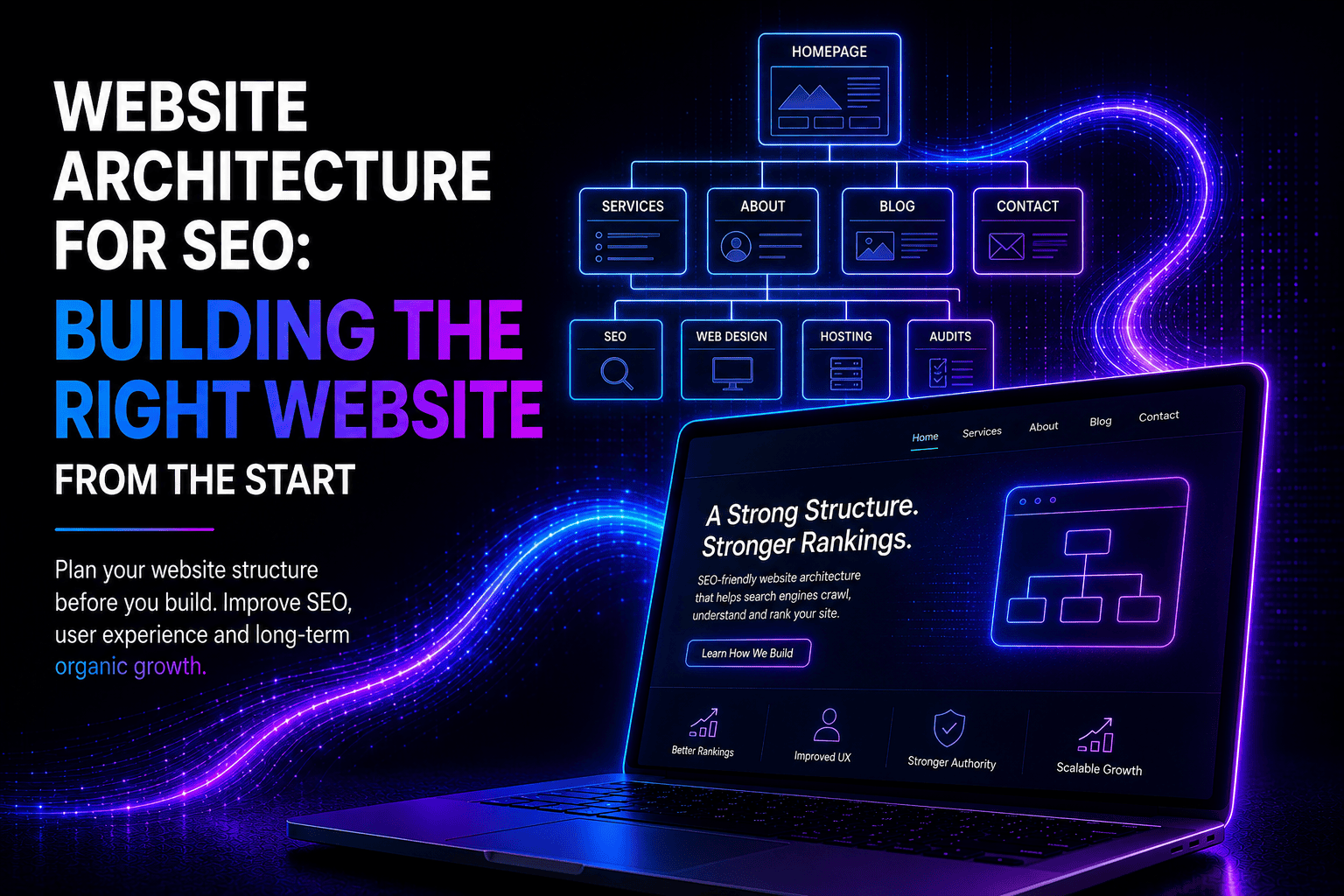
1. Website Architecture Built for Growth
SEO infrastructure starts with structure.
A scalable website:
- Uses clear page hierarchies
- Separates services, locations, and resources
- Supports future expansion without rebuilds
Good architecture allows search engines to understand:
- What you do
- Who it’s for
- Where you operate
Poor architecture caps growth before it starts.
2. Search Intent Mapping (Not Keyword Chasing)
Infrastructure SEO starts with intent, not keywords.
Healthy systems map content to:
- Informational intent (learning)
- Commercial intent (comparison)
- Transactional intent (action)
This ensures visibility across the entire buyer journey — not just the final click.
3. Evergreen Content Systems
Scalable SEO relies on content that remains relevant.
Evergreen content:
- Educates consistently
- Ranks long-term
- Supports authority building
Instead of isolated blog posts, infrastructure SEO builds:
- Topic clusters
- Supporting articles
- Pillar pages
Each piece reinforces the others.
4. Internal Linking as a Structural Asset
Internal links are not decoration — they are structural beams.
Strong internal linking:
- Distributes authority
- Improves crawl efficiency
- Strengthens ranking stability
In infrastructure SEO, internal links are planned, intentional, and scalable — not added randomly.
5. Technical Foundations That Don’t Break Under Load
SEO infrastructure depends on technical stability.
This includes:
- Mobile performance
- Page speed
- Clean indexing
- Secure frameworks
As traffic grows, weak technical foundations become bottlenecks.
Scalable SEO assumes growth — and prepares for it.
Why Infrastructure SEO Outperforms Paid Traffic Long-Term
Paid traffic stops when spend stops.
SEO infrastructure:
- Continues working after investment
- Lowers cost per acquisition over time
- Builds brand familiarity through repetition
Businesses that rely solely on ads experience volatility.
Businesses with SEO infrastructure experience compounding visibility.
SEO Infrastructure and Brand Authority
Search visibility shapes perception.
When a brand consistently appears:
- Across multiple queries
- In different learning stages
- In industry-specific topics
Trust is built before contact.
SEO infrastructure turns search presence into brand credibility at scale.
Scaling SEO Across Services, Locations, or Markets
Infrastructure SEO allows controlled expansion.
Instead of reinventing strategy, businesses:
- Extend existing structures
- Replicate proven frameworks
- Maintain consistency
This is critical for:
- Multi-location businesses
- Service-based companies
- Franchises
- Growing digital brands
Growth becomes additive — not chaotic.
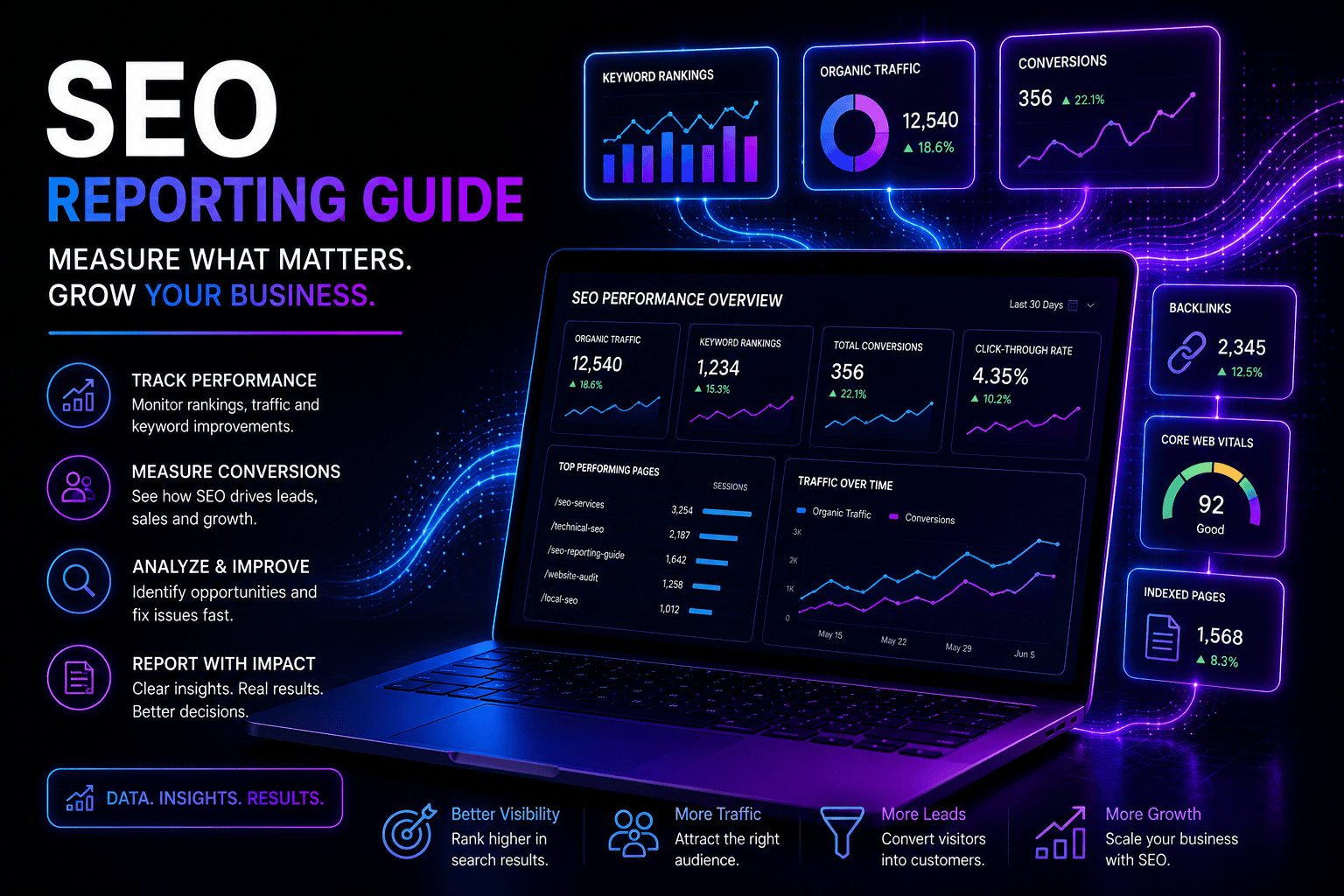
Measuring SEO as Infrastructure (Not Vanity Metrics)
Infrastructure SEO is measured differently.
Instead of focusing only on rankings, healthy systems track:
- Organic entry points
- Assisted conversions
- Traffic distribution
- Topic-level growth
The question becomes:
“Is organic traffic supporting business outcomes?”
Not: “Did we rank for one keyword?”
Common Mistakes That Prevent SEO from Scaling
Many businesses unknowingly sabotage SEO infrastructure by:
- Publishing unstructured content
- Ignoring internal linking
- Mixing unrelated topics
- Chasing trends over intent
These actions create noise — not growth.
SEO infrastructure demands discipline, planning, and long-term thinking.
SEO Infrastructure and Digital Resilience
Markets change. Algorithms evolve. Platforms rise and fall.
Infrastructure SEO protects against volatility by:
- Diversifying traffic sources
- Strengthening owned visibility
- Reducing platform dependency
It becomes a stabilising force in uncertain digital environments.
When SEO Becomes a Business Asset
When SEO is infrastructure:
- It supports sales, not just marketing
- It informs strategy, not guesses
- It compounds rather than resets
At this stage, SEO is no longer a cost centre — it is a growth asset.
FAQ: SEO as Infrastructure
How long does it take to build SEO infrastructure?
Foundations can be laid within months, but true scalability develops over 6–12 months and strengthens over time.
Is infrastructure SEO only for large businesses?
No. Smaller businesses benefit even more because efficiency and compounding matter most when resources are limited.
Can SEO infrastructure reduce reliance on ads?
Yes. Over time, organic traffic offsets paid dependency and lowers acquisition costs.
Does content volume matter?
Structure matters more than volume. Strategic coverage beats mass publishing.
Is SEO infrastructure future-proof?
No strategy is immune to change, but strong infrastructure adapts far better than tactics.
Final Thoughts
SEO that scales is not built through hacks, trends, or shortcuts.
It is built the same way strong businesses are built:
- With structure
- With intent
- With long-term thinking
Treat SEO as infrastructure, and organic traffic becomes predictable, resilient, and compounding.
Treat it as a tactic, and you will always be rebuilding from scratch.