What Every Business Should Know Before Building a Website in 2026
In 2026, a business website is no longer just an online brochure — it’s the foundation of your brand’s digital presence, lead generation engine, and customer experience platform. A well‑built website doesn’t just exist; it converts visitors into customers, supports your SEO strategy, and grows with your business.
Before you begin building a new website (or redesigning an old one), there are essential things every business should understand. These insights will save time, reduce costs, and ensure your investment delivers measurable results.
1. Your Website Must Serve a Clear Purpose
Every effective website starts with a simple question:
What do you want your website to achieve?
A website built without strategic intent is like setting off on a journey without a map.
Ask yourself:
- Is the goal to generate leads?
- Sell products online?
- Educate users?
- Showcase your portfolio or services?
- Support customer service?
Once you define your primary goal, every page, call‑to‑action, and design element should align with it.
Pro Tip: Clarify your top 1–3 business objectives before starting development. These will influence structure, design, content, and functionality.
2. Mobile‑First Isn’t Optional — It’s Essential
More than half of web traffic worldwide now comes from mobile devices. A website that isn’t designed for mobile users will fail in both user experience and search engine rankings.
In 2026 your website must be:
- Fully responsive across all screen sizes
- Easy to navigate with thumbs (touch‑friendly)
- Optimized for speed on mobile networks
Business Impact: Users on slow or poorly designed mobile sites leave faster, increasing bounce rates and reducing conversions.
3. Website Speed Directly Impacts SEO and Conversions
In 2026, page speed is more than an optimisation detail — it’s a ranking factor.
Google tracks metrics like:
- How fast your pages load
- How soon the page becomes interactive
- User experience across devices
Slow websites not only rank lower in Google but also lose visitors. Research shows that users expect pages to load in two seconds or less — and many will abandon a slow site before it fully loads.
Pro Tip: Optimise images, use caching, serve compressed files, and choose fast hosting from the start.
4. Content Strategy Comes Before Design
A website should be built around quality content, not the other way around. When content comes first:
✔ Structure becomes clearer
✔ Navigation becomes smarter
✔ SEO becomes more effective
Content goals should include:
- What visitors need to know
- What customers search for
- What differentiates your business
One of the biggest mistakes businesses make is focusing on visuals first and leaving content to the end.
Pro Tip: Map out key content before design — your web team will thank you.
5. SEO Must Be Built In — Not Added After
SEO is not an add‑on feature — it must be integrated into every step of design and development.
This includes:
- Keyword research for core pages
- Optimised page titles and meta descriptions
- Logical URL structure
- Internal linking strategy
- Fast, clean code
- Structured data/schema
When SEO is planned early, Google can index and rank your pages more effectively — and you’ll see results faster.
Local businesses should optimise for location‑based search terms (e.g., “web development Johannesburg” or “accommodation South Coast”) to attract nearby customers.
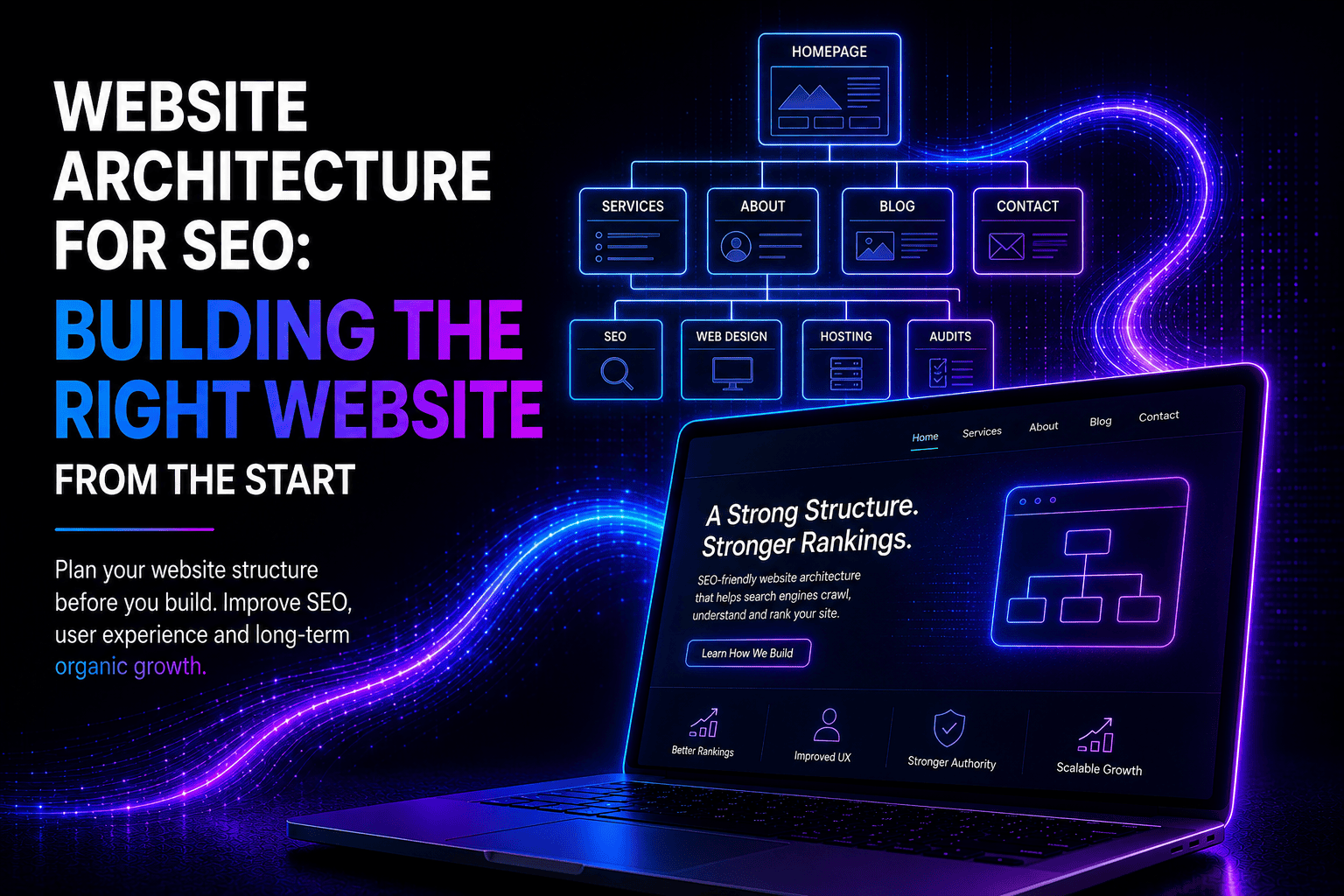
6. Navigation and Information Architecture Matter More Than You Think
Users must be able to find what they want within seconds.
Effective navigation includes:
- Clear menu labels
- Logical page hierarchy
- Simple dropdowns
- Breadcrumbs on deeper pages
- Search functionality if needed
Poor navigation frustrates visitors and increases bounce rates — both are signals search engines interpret as low user satisfaction.
Best Practice: Test your navigation with real users before launch.
7. Your Website Must Support Conversions
Every successful business website includes built‑in conversion mechanisms. These can include:
- Contact forms
- Calls‑to‑action (CTAs) on every page
- Clear service or product pages
- Lead capture forms or newsletter sign‑ups
- Online booking or e‑commerce
Conversion optimisation should be planned from the start — not patched on later.
Pro Tip: Place key CTAs above the fold and repeat them where relevant.
8. Analytics and Tracking Are Non‑Negotiable
If you can’t measure it, you can’t improve it.
Your website should include:
- Google Analytics 4 (GA4)
- Google Search Console setup
- Conversion tracking (e.g., form submissions)
- Behaviour tracking (heatmaps or event tracking)
This data tells you:
- Which pages attract visitors
- Where users drop off
- Which keywords are performing
- What content converts best
Without tracking, you’re flying blind.
9. Security and Compliance Are Now Critical
In 2026, website security is essential for both users and businesses.
Key elements include:
- HTTPS with SSL certificate
- Regular backups
- Secure hosting
- Strong login protections
- Compliance with privacy laws (POPIA, GDPR, etc.)
If users feel unsafe, they won’t purchase, submit forms, or engage — and search engines may penalise insecure sites.
10. Websites Evolve — They Don’t Get Built Once and Forgotten
The old model of “build it and leave it” no longer works.
A business website in 2026 should be:
- Regularly updated with fresh content
- Monitored for performance and SEO
- Improved based on analytics
- Supported by ongoing optimisation
This is why many businesses work with a web development team — someone who understands both design and long‑term strategy.
11. Performance & Speed — Not Just Desktop, But Mobile Too
Fast websites matter for ranking and user experience.
Google now uses Core Web Vitals — real user metrics — as ranking signals.
To stay competitive:
- Optimise image sizes
- Prioritise visible content
- Use lazy loading where appropriate
- Minimise JavaScript where possible
A website that loads quickly builds trust and keeps visitors engaged.
12. Accessibility Is Essential
Accessibility isn’t just ethical — it’s good business.
Accessible websites:
- Support users with disabilities
- Improve readability and navigation
- Expand your audience reach
- Help with SEO
Consider WCAG guidelines, alt text for images, keyboard navigation, and readable fonts.
13. Your Website Must Reflect Your Brand
A website isn’t just functional — it should express your brand identity.
A strong brand presence online:
- Builds trust
- Strengthens recognition
- Enhances credibility
- Supports all marketing channels
Consistent colours, fonts, messaging, and tone unify your digital presence.
Summary: Key Areas to Get Right Before Website Development
✔ Clear business goals
✔ Mobile‑first design
✔ SEO integrated from the start
✔ Fast performance and smooth navigation
✔ High‑quality content — planned early
✔ Conversion‑focused design
✔ Tracking and analytics
✔ Ongoing optimisation strategy
✔ Security and compliance
✔ Brand consistency
How a Professional Web Team Makes It Easier
Many businesses underestimate the complexity of building a modern website. A professional team like Web Anatomy brings:
- Strategic planning
- Technical expertise
- SEO‑technology integration
- Clean, scalable code
- Ongoing support model
Instead of piecing things together, you get a coordinated build that drives results.
Ready to Build Your Website in 2026?
If you’re planning a new website or redesigning your current one, now is the time to think strategically.
Web Anatomy builds websites that are:
- SEO‑ready
- Built for conversions
- Fast, secure, and future‑proof
- Designed with your business goals in mind
Let us help you and your business win online.
Contact Web Anatomy today and start your website project with confidence.
Suggested SEO FAQ (Optional Rich Snippet Section)
Q1: How long does it take to build a professional business website?
Most custom websites take 6–12 weeks from planning to launch, depending on scope.
Q2: What’s the difference between a DIY template and a professional website?
Professional builds include strategy, SEO integration, performance optimisation, and ongoing support.
Q3: Do I need SEO before my website is launched?
Yes — planning SEO early ensures faster visibility and better rankings.
Q4: Can my website be updated easily after launch?
Yes. Most modern builds use content management systems (CMS) like WordPress, making content updates user‑friendly.