Search engine optimisation (SEO) is a strategic, ongoing process. You can create amazing content, optimise your website, and build backlinks, but without measuring results, it’s impossible to know what’s working and where to improve. That’s where SEO reporting and reviews come in.
At Web Anatomy, we help businesses connect SEO activity to real business outcomes, turning data into insights, insights into action, and action into growth. In this guide, we’ll cover everything you need to know about SEO reporting and reviews, including best practices, key metrics, tools, and FAQs.
What Is SEO Reporting?
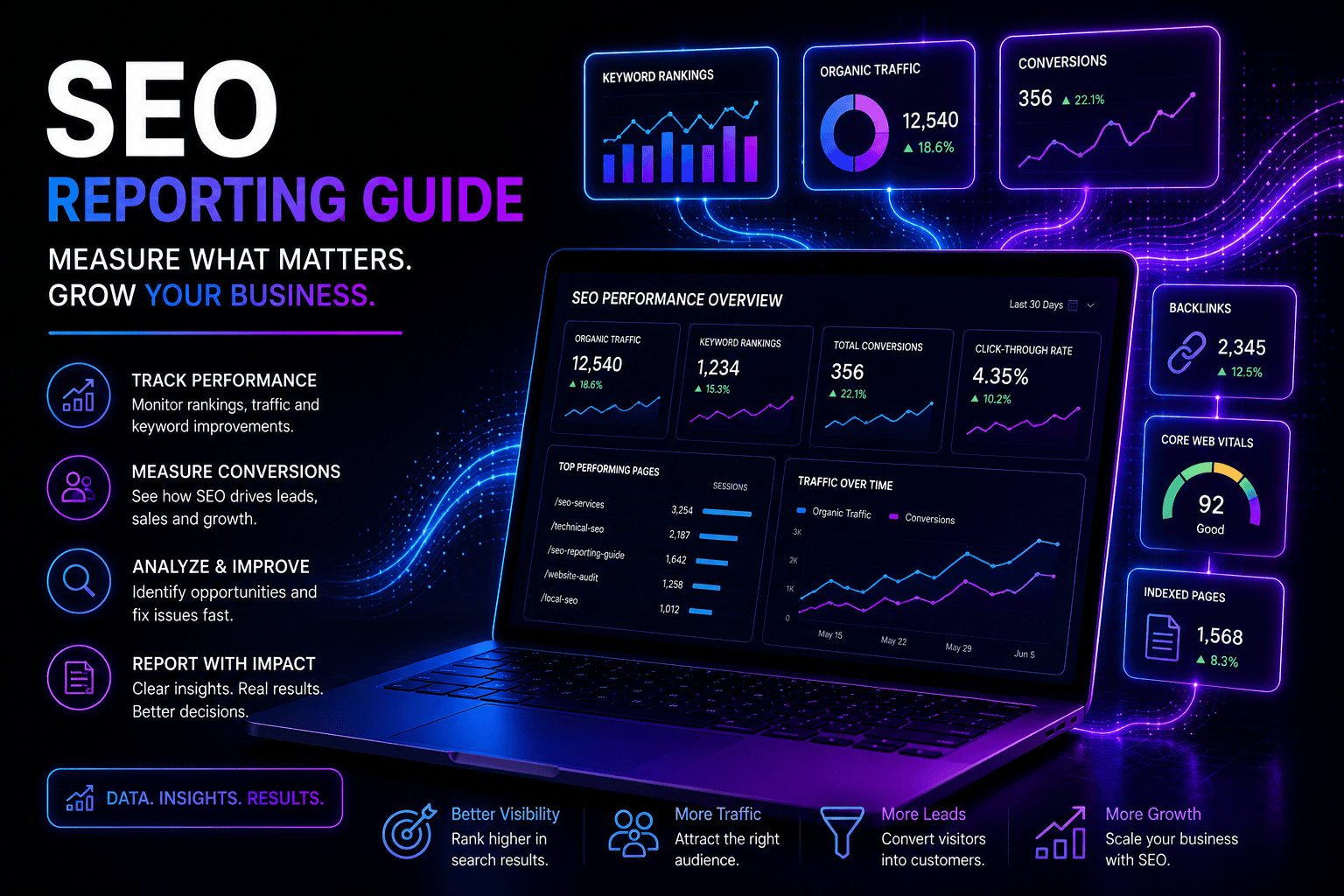
SEO reporting is the process of collecting, analysing, and presenting SEO performance data in a way that demonstrates progress, identifies opportunities, and drives decisions.
A good SEO report doesn’t just show traffic numbers or keyword rankings; it tells a story about your SEO strategy — what’s working, what isn’t, and what steps should come next.
Key goals of SEO reporting:
- Track progress toward traffic, visibility, and conversion goals
- Identify technical issues, content gaps, or underperforming pages
- Communicate value to stakeholders clearly and consistently
- Support data-driven decision-making for ongoing optimisation
What Are SEO Reviews?
While SEO reporting focuses on tracking metrics, SEO reviews are strategic evaluations of your SEO strategy.
SEO reviews are usually done quarterly or semi-annually to:
- Assess the effectiveness of SEO tactics
- Identify new opportunities in content, technical optimisation, or link-building
- Update strategy based on algorithm changes, market trends, or business goals
Think of SEO reports as the pulse — frequent, actionable, and detailed — and SEO reviews as the check-up, providing insights for strategic decisions.
Why SEO Reporting and Reviews Matter
SEO is long-term and dynamic. Search engines, competition, and user behaviour change constantly. Without structured reporting:
- You can’t demonstrate ROI. Stakeholders want to see traffic, leads, and conversions, not just rankings.
- Problems can go unnoticed. Technical issues, traffic drops, or duplicate content may quietly harm performance.
- Teams may work in silos. Reports and reviews ensure marketing, content, product, and tech teams align.
By turning data into insights, businesses can prioritise optimisations, adjust campaigns, and make confident decisions that drive growth.
How Often Should You Report SEO Performance?
The frequency of SEO reporting depends on goals, resources, and the type of website:
- Weekly: Quick insights for urgent issues, such as technical errors or sudden traffic drops.
- Monthly: Standard cadence for tracking trends, keyword performance, and engagement metrics.
- Quarterly: Strategic review for evaluating overall performance, refining content plans, and setting new priorities.
Web Anatomy tip: Maintain a consistent reporting schedule. Frequent changes in cadence or metrics make it difficult to track trends over time.
Key Elements of an SEO Report
A strong SEO report is clear, concise, and actionable. It should focus on metrics that align with your business objectives:
1. Organic Traffic Performance
- Sessions and pageviews
- Traffic sources (organic, direct, referral)
- Bounce rate, time on page, and engagement metrics
Why it matters: Shows whether your website is attracting visitors and keeping them engaged.
2. Keyword Rankings and Visibility
- Track target keywords and their ranking trends
- Monitor featured snippets, local packs, and SERP features
Why it matters: Helps assess how well your content matches search intent and performs against competitors.
3. Conversions and Goal Tracking
- Track leads, sales, sign-ups, or other key actions attributed to organic traffic
Why it matters: Connects SEO performance directly to business outcomes, showing real ROI.
4. Technical SEO Health
- Crawl errors, indexing issues, and Core Web Vitals
- Page speed, mobile usability, HTTPS status, and structured data
Why it matters: Technical problems can block content from ranking and degrade user experience.
5. Backlink Profile Analysis
- Number and quality of referring domains
- Anchor text distribution
- Lost or gained links
Why it matters: Backlinks remain a strong ranking factor; they signal trust and authority to search engines.
6. Content Performance Insights
- Top-performing pages and content types
- Pages with declining traffic or engagement
- Opportunities for refresh or repurposing
Why it matters: Guides your content strategy, ensuring focus on high-impact pages.
Best Practices for Effective SEO Reporting
- Focus on actionable insights – Explain why metrics changed and suggest next steps.
- Tailor reports to your audience – Technical teams need crawl and index data; executives want high-level ROI and growth metrics.
- Maintain consistency – Keep the same format, KPIs, and reporting cadence to track trends over time.
- Highlight recommendations – Include clear, prioritised actions for the next period.
- Use visuals wisely – Graphs, charts, and tables help communicate trends quickly.
Common SEO Reporting Mistakes
- Tracking vanity metrics: Total keyword counts or raw traffic without business context.
- Data overload: Too much information can confuse decision-makers.
- Ignoring trends: Focusing on short-term fluctuations rather than long-term patterns.
- No action items: Reports without recommendations are just information, not insight.
Tools for SEO Reporting and Reviews
- Google Search Console: Keyword performance, index coverage, and technical alerts.
- Google Analytics 4 (GA4): Engagement, conversions, and revenue attribution.
- Looker Studio: Custom dashboards combining multiple data sources.
- Ahrefs, Semrush, Moz: Backlink tracking, competitor analysis, and keyword research.
- Power BI / Tableau: Enterprise-level, multi-source reporting and analytics.
Web Anatomy tip: Combine multiple tools to create a single source of truth that everyone can access and understand.
How to Make SEO Reporting a Strategic Asset
SEO reporting should do more than track activity — it should:
- Show real business impact and ROI
- Highlight growth opportunities in content, technical optimisation, and link-building
- Align teams across marketing, product, and technical departments
- Drive data-driven decisions rather than guesswork
FAQ — 15 Questions About SEO Reporting and Reviews
- What is the difference between an SEO report and an SEO review?
A report tracks metrics and trends; a review evaluates overall strategy and sets priorities. - How often should I produce SEO reports?
Weekly for technical monitoring, monthly for performance tracking, and quarterly for strategic evaluation. - Which metrics matter most?
Traffic, rankings, conversions, technical health, and backlink quality are the core metrics. - Do I need to track every keyword?
No — focus on high-value and target keywords aligned with business goals. - What tools are best for SEO reporting?
Google Search Console, GA4, Looker Studio, and SEO platforms like Ahrefs or Semrush. - Should SEO reports include competitor analysis?
Yes — benchmarking against competitors helps identify gaps and opportunities. - How do I measure SEO ROI?
Connect organic traffic to conversions, leads, sales, or revenue for measurable impact. - Can reporting fix SEO problems?
Reporting identifies issues and guides decisions; action is required to fix problems. - Should I report technical SEO metrics?
Absolutely — technical health impacts rankings, crawlability, and user experience. - Is visualisation important in SEO reports?
Yes — charts and graphs help stakeholders quickly understand trends and insights. - What is a common SEO reporting mistake?
Focusing on raw numbers without context or recommended actions. - Do I need different reports for executives vs. SEO teams?
Yes — tailor the level of detail and KPIs to the audience. - How do SEO reviews improve performance?
They identify strategy gaps, allow course correction, and highlight optimisation priorities. - Can I automate SEO reporting?
Yes — dashboards and reporting tools can automate data collection, but human analysis is essential. - What’s the first step to better SEO reporting?
Define clear KPIs that align with business goals, then design reports to track them consistently.
Conclusion:
SEO reporting and reviews are more than tracking metrics — they are the foundation for growth, alignment, and decision-making. By measuring performance accurately, interpreting trends, and prioritising action, businesses can turn SEO into a strategic advantage, not just a marketing activity.
At Web Anatomy, we help clients design reporting frameworks that connect SEO to business outcomes, ensuring every optimisation effort drives measurable results.
✅